When a cat starts using the litter box more frequently, spends a long time in the toilet, or urinates outside the box, owners usually first think the problem is with the litter. In practice, it's much more common for cat urinary food and litter to be a topic that needs to be observed together, as changes in urination, urine odor, and litter box habits often indicate a urinary problem that requires a quick reaction.
In cats, urinary problems don't always develop dramatically. Sometimes the first sign is something small – smaller clumps in the litter box, more frequent trips to the toilet, straining, or increased licking of the genital area. Therefore, it's not enough to just buy „some good litter” or switch to a new food without a clear reason. If you really want to help your cat, it's important to understand the role of medical nutrition, as well as how the right litter can make it easier for you to monitor their condition.
When cat urinary food makes sense
Urinary food is not just ordinary premium food with nice marketing. These are formulas designed to support urinary tract health, most often in cats that are prone to crystals, bladder sand, lower urinary tract inflammation, or recurring episodes of difficulty urinating.
Depending on the formula, such food can help control urine pH, reduce the concentration of minerals that contribute to crystal formation, and encourage increased water intake, especially if dry and wet versions are combined. This does not mean that every Urinary food Some are intended for dissolving struvite crystals, some for long-term prevention of recurrence, and some are adapted for cats that also have excess weight, sterilization, or sensitive digestion along with their urinary problem.
This is precisely why it's important not to blindly introduce medical nutrition. If a cat has acute symptoms – straining without urination, pain, blood in the urine, frequent unsuccessful attempts – it's not the time for experimentation, but for examination. With urinary obstructions, especially in males, time is a serious factor.
Where does sand fit into the whole story?
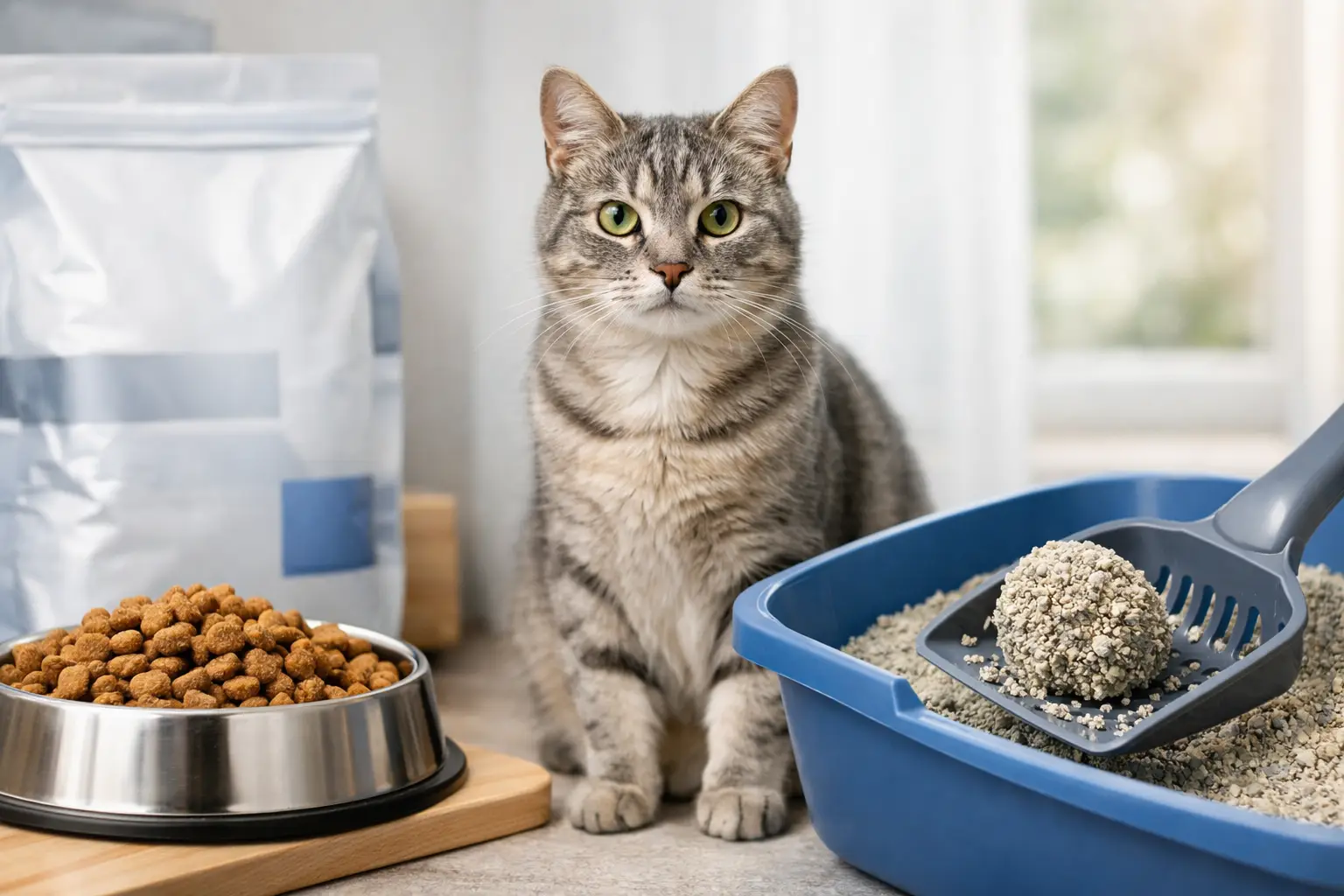
Owners often underestimate how useful litter can be as a health indicator. Good litter doesn't cure urinary problems, but it helps you notice them earlier and monitor them more easily. When you know how often your cat urinates, the size of the clumps, whether there's an unusually strong odor or traces of blood, you have a much clearer picture than when using litter that absorbs poorly or doesn't form clumps.
For cats on a urinary diet, monitoring their urination is just part of the daily routine. If a cat drinks more water, you'll often see it reflected in larger, more regular clumps. If the number of litter box visits increases and the clumps become small, it can be a sign that they are urinating frequently and in small amounts. This is information that means a lot to the veterinarian.
What type of litter is best for a urinary diet?
There is no universally perfect choice for every cat, but there are characteristics that are particularly useful when monitoring urinary health. Clumping litter is the most practical because it clearly shows the amount of urine. Good absorbency reduces unpleasant odors and makes hygiene easier to maintain. Low dust is important for cats with respiratory sensitivities, as well as for owners who want a cleaner space around the litter box.
If you have a picky cat, don't abruptly change the litter's texture or scent right when you're introducing new food. Too many changes at once can lead to the cat avoiding the litter box, making it harder to assess whether the problem is behavioral, stress-related, or a urinary issue. A neutral, unscented litter is often the safest choice for sensitive cats.
Some owners choose silica gel litter for good odor control. This can be practical, but when monitoring the amount of urine, many find clumping mineral or bentonite litter easier to see. It's not that one type is absolutely better, but rather which one gives you better control and which your cat accepts without hesitation.
Urinary cat food and litter – why they should be considered together
When urinary cat food is introduced, the goal is not just for the cat to „eat something special,” but to reduce the risk of repeating problems and stabilize the urinary tract's condition. The litter, in this process, becomes your daily indicator. The food acts from the inside, and the litter shows what is changing on the outside.
If a cat on an appropriate diet urinates regularly, without straining, and with normal amounts of urine, that's a good sign. If, despite changing food, you still notice frequent trips to the litter box, small clumps, urinating outside the box, or traces of blood, further examination is necessary. In other words, the litter doesn't solve the problem, but it can be the first alarm that therapeutic nutrition alone is not enough or that the diagnosis needs to be clarified.
The most common mistakes owners make
The first mistake is self-introducing urinary food without confirming the specific problem. Not all crystals are the same, and not all urinary symptoms are caused by crystals. Stress, idiopathic cystitis, low water intake, obesity, and an unclean litter box can present a similar picture.
Another common mistake is giving up too soon. Owners sometimes expect visible improvement in a day or two. With some cats, changes are seen quickly, but it often takes time, consistency, and good control of food intake. If the cat is given a lot of treats or other food along the way that disrupts the diet, the desired result may not be achieved.
The third mistake is Water neglect. Not even the best urinary formula can compensate for chronically low fluid intake. A water fountain, multiple bowls throughout the apartment, and the inclusion of wet food often make a big difference.
The fourth mistake is focusing only on the food, and not on the conditions in which the cat urinates. A dirty litter box, too few litter boxes in a multi-cat household, a noisy location, or litter that the cat doesn't tolerate can worsen the situation.
How to know if a cat's food and litter are suitable for them
The best sign isn't an advertisement on the packaging, but your cat's behavior and what you see in the litter. A cat that urinates more easily, strains less, doesn't avoid the litter box, and doesn't have episodes of urinating outside the box is likely responding well to the diet. In addition, clumps in the litter give you a more concrete sense of the frequency and amount of urination.
Pay attention to the bigger picture as well. Is the cat eating normally, is its mood better, is it hiding less, is it licking its stomach and genital area less? Urinary problems rarely remain just a „urination problem.” The cat shows it through its overall behavior.
If you have multiple cats, monitoring is harder, but not impossible. Sometimes temporarily separating them, even for part of the day, helps to see how much each cat is urinating. This is especially useful when one cat already has a confirmed history of urinary problems.
When an urgent trip to the vet is necessary
There are situations when there is no room for waiting. If a cat enters the litter box, strains, and does not urinate, if it meows loudly in pain, has blood in its urine, vomits, appears lethargic, or withdraws completely, an urgent examination is needed. This is especially true for male cats due to the risk of obstruction.
In such moments, neither urinary food nor changing the litter are first aid. They are part of a broader plan after diagnosis, not a substitute for examination.
How to choose reasonably, without improvising
The safest approach is to align food choices with veterinary recommendations and the cat's specific condition, and litter choices with the pet's habits and your need to monitor urination. For some, strictly medical diet i by sprinkling a neutral litter. Another, with therapy and monitoring, will need a long-term maintenance urinary program and the litter that the cat best accepts.
That's the biggest difference between buying blindly and buying with advice. When you know why the cat is getting a certain food and what to observe in the litter box, it's much easier to make the right decision and react in time. Happy Dog Club has built customer trust on this for years – ensuring that owners aren't left alone in front of a shelf full of choices, but rather receive clear guidance that makes sense for their specific pet.
If you suspect a urinary problem, view the litter box as an important source of information, and food as part of serious support, not as a casual purchase. Cats rarely speak up when something is bothering them, but they almost always leave enough clues in their litter box for us to understand them in time.